
Plastic waste is generated across manufacturing, packaging, automotive, construction, consumer goods, and other industries. For businesses that want to recover usable material from plastic scrap, the right plastic recycling machinery can improve material handling, reduce waste, and support more efficient production.
However, choosing a plastic recycling machine manufacturer in India should not be based only on machine price. The right equipment depends on the type of plastic, feed size, required output, production capacity, and the next stage of processing.
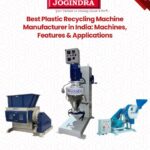
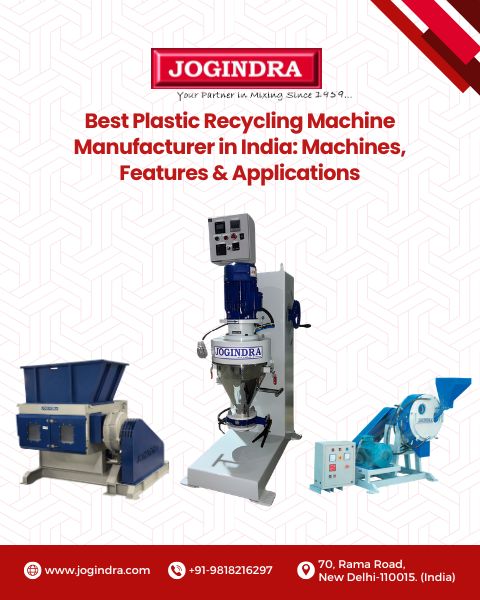
Jogindra Engineering Works manufactures industrial machinery for plastic recycling and processing applications, including Single Shaft Shredder, Scrap Granulator, Pulverizer Machine, Ribbon Blender Mixer, and Heating Cooling Mixer.
This guide explains how these machines work, where they are used, what materials they can process, and what buyers should consider before selecting plastic recycling equipment.
What Is a Plastic Recycling Machine?
A plastic recycling machine is industrial equipment used to reduce, grind, granulate, pulverize, mix, or otherwise process plastic waste so that it can be reused or sent to the next stage of recycling or manufacturing.
The exact machinery required depends on the plastic waste and the desired final material.
A typical plastic recycling process may look like:
Plastic Waste → Shredding → Granulation → Pulverizing → Mixing → Further Processing
Not every recycling plant requires all these stages.
For example, large plastic lumps may need a plastic shredder before granulation, while rigid PVC scrap that needs fine grinding may require a PVC pulverizer.
In simple terms:
-
Shredder: Reduces large or bulky plastic waste.
-
Granulator: Converts suitable plastic scrap into smaller granules.
-
Pulverizer: Produces fine plastic powder from suitable material.
-
Ribbon Blender: Uniformly mixes powders, granules, and dry blends.
-
Heating Cooling Mixer: Performs controlled heating, mixing, and cooling for plastic formulations.
This distinction is important because the “best” machine is always dependent on the application.
How Does Plastic Recycling Machinery Work?
Plastic recycling machinery works through different processing stages depending on the material.
Stage 1: Size Reduction
Large plastic waste is first reduced in size using equipment such as a Single Shaft Shredder.
Stage 2: Granulation
The smaller pieces can then be processed through a Scrap Granulator to produce more uniform granules.
Stage 3: Fine Grinding
Where a fine particle size is required, suitable material can be processed using a Pulverizer Machine.
Stage 4: Mixing
Recycled plastic powders or granules may need to be mixed with additives or other materials using a Ribbon Blender Mixer.
Stage 5: Heating and Cooling
For certain plastic formulations, a Heating Cooling Mixer can provide controlled mixing, heating, and subsequent cooling before further processing.
Therefore, plastic recycling machinery should be selected as part of the complete process flow, rather than as an isolated machine.
Types of Plastic Recycling Machines
Different plastic recycling applications require different machines.
| Machine | Main Function | Typical Application |
|---|---|---|
| Single Shaft Shredder | Size reduction | Large and bulky plastic scrap |
| Scrap Granulator | Granulation | Plastic scrap, pipes, profiles, sheets, film |
| Pulverizer Machine | Fine grinding | Rigid PVC and suitable pre-ground plastic |
| Ribbon Blender Mixer | Uniform mixing | PVC dry blends, granules, masterbatch |
| Heating Cooling Mixer | Heating, mixing & cooling | PVC, masterbatch, pipes, cables, WPC |
Let’s understand each machine in detail.
1. Single Shaft Shredder
A Single Shaft Shredder is used for reducing larger plastic waste and bulky industrial scrap into smaller pieces.
This type of plastic shredder machine can be useful when the incoming material is too large or irregular for direct feeding into downstream recycling equipment.
Applications of a Single Shaft Shredder
Depending on the machine configuration and material characteristics, applications can include:
-
Large plastic lumps
-
Bulky plastic waste
-
Industrial plastic scrap
-
Production rejects
-
Difficult-to-handle plastic waste
The shredded material can then be sent to another size-reduction stage, such as granulation.
Why Use a Plastic Shredder?
Shredding can help:
-
Reduce the size of bulky material
-
Make feeding easier
-
Improve material handling
-
Prepare scrap for further processing
-
Create a more manageable feed for downstream equipment
Shredder vs Granulator
This is an important distinction for buyers.
A shredder is generally selected for larger and bulkier material, whereas a granulator is designed to produce smaller and more uniform plastic pieces.
A recycling line may therefore use both machines:
Large Plastic Scrap → Shredder → Granulator → Reusable Granules
The actual configuration depends on the material and required output.
2. Scrap Granulator
A Scrap Granulator is used to reduce suitable plastic scrap into smaller, more uniform granules.
It is commonly relevant to plastic processing industries where production scrap needs to be reduced in size for reuse or further recycling.
Jogindra’s recycling machinery range includes a Scrap Granulator/Scrap Grinder for applications involving materials such as injection-moulded articles, sprues, pipes, profiles, sheets, film, start-up waste, and head waste.
Scrap Granulator Applications
Depending on the machine and material, applications include:
-
Injection moulding scrap
-
Plastic sprues
-
Plastic pipes
-
Plastic profiles
-
Plastic sheets
-
Plastic film
-
Production waste
-
Start-up waste
-
Head waste
Why Is Granulation Important?
Uniformly sized plastic granules are easier to handle, store, transport, and use in subsequent processing.
For manufacturers generating plastic production scrap, granulation can be an important part of an in-house plastic recycling process.
3. Pulverizer Machine
A Pulverizer Machine is used when plastic needs to be converted into a much finer particle size.
This machine is particularly relevant to applications involving rigid PVC recycling and fine grinding.
Jogindra’s PVC Pulverizer is designed for materials such as PVC profiles, pipes, sheets, and injection moulding rejects. The machine is intended for pre-ground material and performs fine grinding using rotary and fixed grinding components.
Applications of PVC Pulverizer
A PVC pulverizer can be used for suitable:
-
PVC profiles
-
PVC pipes
-
PVC sheets
-
Rigid PVC scrap
-
Injection moulding rejects
-
Pre-ground PVC material
How Does a Plastic Pulverizer Work?
A simplified process is:
Pre-Ground PVC → Fine Grinding → PVC Powder → Further Processing
The required particle size depends on the final application and machine configuration.
Pulverizer vs Granulator
A common mistake is assuming that a pulverizer and granulator perform the same job.
They don’t.
A granulator generally produces smaller plastic pieces or granules, while a pulverizer is designed for much finer grinding.
Therefore, if your requirement is fine PVC powder, a suitable pulverizer is generally more appropriate than a conventional granulator.
4. Ribbon Blender Mixer
Plastic recycling often involves more than just size reduction.
Once plastic has been ground or granulated, manufacturers may need to mix it with other materials, additives, pigments, or formulation components.
A Ribbon Blender Mixer is designed for uniform mixing of powders, granules, and dry blends.
Jogindra’s Ribbon Blender applications include:
-
Plastic materials
-
PVC dry blends
-
Masterbatches
-
Plastic granules
-
Footwear compounds
-
Pipes
-
Cables
Why Is a Ribbon Blender Used in Plastic Processing?
Uniform mixing is important when different components must be distributed consistently throughout a batch.
A ribbon blender can help achieve a homogeneous mixture of suitable:
-
Powders
-
Plastic granules
-
Additives
-
Dry blends
-
Formulation components
Example Application
For PVC processing:
PVC Powder + Additives → Ribbon Blender → Uniform Dry Blend → Further Processing
The exact mixer design and operating parameters should be selected according to the material characteristics and production requirement.
5. Heating Cooling Mixer
A Heating Cooling Mixer is used for applications where plastic materials require controlled mixing, heating, and cooling.
Jogindra offers heating and cooling mixing solutions for applications involving materials such as PVC, ABS, PE, PP and other allied materials.
Depending on configuration, applications include:
-
PVC compounding
-
Masterbatch production
-
UPVC pipe processing
-
CPVC pipe processing
-
Cable manufacturing
-
WPC
-
ABS processing
-
PE and PP processing
-
Dyes and colours
-
Ceramics
-
Other industrial formulations
How Does a Heating Cooling Mixer Work?
The process can be understood in three basic steps:
1. Feeding
The required raw materials are loaded into the mixer.
2. Heating & High-Speed Mixing
The material is mixed while controlled heating takes place.
3. Cooling
The processed material is transferred to the cooling stage to bring its temperature down before further processing.
This type of equipment is particularly useful when temperature control is an important part of the formulation process.
Which Plastic Recycling Machine Do You Need?
This is one of the most important questions to answer before purchasing a machine.
Instead of asking only:
“Which is the best plastic recycling machine?”
ask:
“Which machine is suitable for my material, capacity, feed size, and required output?”
Use this simple guide:
If you have large or bulky plastic waste
Consider a Single Shaft Shredder.
If you need plastic scrap in smaller, uniform pieces
Consider a Scrap Granulator.
If you need fine PVC powder
Consider a Pulverizer Machine.
If you need to mix plastic powders or granules
Consider a Ribbon Blender Mixer.
If your process requires heating, mixing and cooling
Consider a Heating Cooling Mixer.
The final machine selection should always be confirmed according to the exact material and production requirement.
Plastic Recycling Machine Selection: 7 Factors to Consider
Selecting a machine only by looking at its price can lead to problems later.
Before contacting a plastic recycling machine manufacturer in India, prepare the following information.
1. Type of Plastic
Tell the manufacturer exactly what material you want to process.
For example:
-
PVC
-
PP
-
PE
-
ABS
-
Plastic film
-
Pipes
-
Profiles
-
Sheets
-
Injection moulding scrap
-
Plastic lumps
Different materials have different processing characteristics.
2. Feed Material Size
The size of the incoming material matters.
Large plastic lumps may require pre-shredding, while smaller production scrap may be suitable for direct granulation.
3. Desired Output
Define what you need after processing:
-
Shredded pieces
-
Plastic granules
-
Fine powder
-
Mixed formulation
This information helps determine the appropriate equipment.
4. Production Capacity
Calculate your approximate requirement in:
kg/hour, tonnes/day, or batch size.
Do not select capacity only because a machine has a higher quoted output.
The capacity should match your actual production requirement and material characteristics.
5. Final Application
Tell the manufacturer what you plan to do with the processed material.
For example:
-
Reuse in manufacturing
-
PVC processing
-
Pipe production
-
Cable manufacturing
-
Compounding
-
Masterbatch production
-
Further recycling
The final application can influence the required processing stage.
6. Machine Configuration
Ask about:
-
Rotor/blade configuration
-
Grinding components
-
Motor and drive system
-
Feeding arrangement
-
Discharge arrangement
-
Control system
-
Safety features
-
Wear parts
The correct configuration depends on the application.
7. After-Sales Support
Industrial machinery is a long-term investment.
Before purchasing, ask about:
-
Installation
-
Commissioning
-
Operator guidance
-
Spare parts
-
Maintenance support
-
Technical assistance
-
Troubleshooting
A reliable support system can make machine ownership easier over the long term.
Why Consider Jogindra for Plastic Recycling Machinery?
Jogindra Engineering Works is an Indian industrial machinery manufacturer with experience in plastic processing, recycling, mixing, grinding, conveying, and related applications.
The company states that it has been involved in machinery manufacturing since 1959 and has completed more than 6,000 installations worldwide.
For plastic recycling and processing requirements, Jogindra’s machinery portfolio includes:
-
Single Shaft Shredder
-
Scrap Granulator
-
Pulverizer Machine
-
Ribbon Blender Mixer
-
Heating Cooling Mixer
-
High Speed Mixer
-
Vacuum Hopper Loader
-
Other industrial processing equipment
This broad machinery range can be useful for businesses that need different stages of plastic processing from a single experienced machinery manufacturer.
However, choosing a manufacturer should still be based on your actual application, material, capacity, required output, machine configuration, and technical support requirements.
Applications of Plastic Recycling Machinery
Plastic recycling and processing machines can be used across several industries.
Plastic Manufacturing
Production scrap such as runners, sprues, rejected components, and other plastic waste can be processed for suitable reuse or further recycling.
PVC Industry
Pulverizers and mixers are particularly relevant to PVC processing applications involving profiles, pipes, sheets, dry blends, and related materials.
Pipe Manufacturing
Plastic processing machinery can support pipe manufacturing through scrap size reduction, blending, and formulation preparation.
Cable Manufacturing
Mixing equipment can be used for suitable cable-processing formulations.
Masterbatch Production
Granulation, blending, and heating/cooling processes can be part of masterbatch manufacturing, depending on the formulation.
WPC Manufacturing
Heating Cooling Mixer systems can be used in suitable WPC processing applications.
Plastic Waste Recycling
Shredders and granulators can help convert larger plastic waste and production scrap into more manageable material for subsequent processing.
Benefits of Using the Right Plastic Recycling Equipment
The right machinery can provide several operational advantages.
Better Scrap Management
Plastic waste can be processed systematically instead of being handled entirely as bulky scrap.
Improved Material Handling
Size reduction makes many types of plastic waste easier to store, transport, feed, and process.
Potential Material Recovery
Suitable plastic scrap can be processed for reuse or further recycling, depending on its composition and quality.
More Efficient Production Workflow
Using dedicated machinery for each processing stage can create a more organized production flow.
Support for Sustainable Manufacturing
Recovering and reusing suitable plastic waste can help manufacturers reduce material wastage and improve resource utilization.
Plastic Recycling Machine Manufacturer in India: What Makes a Manufacturer Reliable?
A reliable plastic recycling machine manufacturer in India should be evaluated on more than marketing claims.
Look for:
Application Knowledge
The manufacturer should understand the material you are processing and recommend equipment accordingly.
Machine Engineering
The machine should be designed for the required duty, material characteristics, and production environment.
Customization
Some applications require specific feeding, cutting, grinding, mixing, or discharge arrangements.
Technical Support
Installation, commissioning, maintenance and troubleshooting support are important for industrial equipment.
Spare Parts
Availability of wear parts and replacement components should be discussed before purchase.
Relevant Experience
A manufacturer’s experience with similar materials and applications can help reduce machine-selection errors.
Common Mistakes Buyers Make When Purchasing Plastic Recycling Machines
Choosing Only on Price
The lowest initial price does not necessarily mean the lowest total operating cost.
Not Providing Material Details
Simply telling a manufacturer that you need a “plastic recycling machine” is usually not enough.
Provide the exact material and its form.
Ignoring Feed Size
A machine suitable for small production scrap may not be appropriate for large plastic lumps.
Selecting Capacity Without Testing
Quoted capacity can depend on material type, feed size, moisture, bulk density, screen size, and other operating conditions.
Buying a Machine Without Considering the Next Stage
The output of one machine should be compatible with the next processing stage.
A complete process flow is more important than an isolated machine.
Example Plastic Recycling Process
A simplified recycling workflow may look like:
Plastic Waste
↓
Single Shaft Shredder
↓
Scrap Granulator
↓
Pulverizer (if fine grinding is required)
↓
Ribbon Blender / Heating Cooling Mixer (if mixing or formulation is required)
↓
Further Plastic Processing
This is only an example. A real plant may use fewer or additional stages depending on the material and final application.
Frequently Asked Questions
What is the best plastic recycling machine manufacturer in India?
The right manufacturer depends on your material, capacity, output requirement, machine configuration, technical support, and application experience. Jogindra offers multiple machines for plastic recycling and processing applications.
Which machine is used for plastic scrap recycling?
A plastic recycling setup may use a shredder, granulator, pulverizer, or a combination of machines depending on the type and size of plastic scrap.
What is the difference between a shredder and a granulator?
A shredder is generally used to reduce large or bulky plastic waste, while a granulator produces smaller and more uniform plastic pieces.
Which machine is used to make plastic powder?
A suitable plastic pulverizer machine is used when fine plastic powder is required. The material must be suitable for pulverization and the required particle size should be defined beforehand.
Can PVC be recycled using plastic recycling machinery?
Yes. Suitable PVC waste can be processed using appropriate shredding, grinding, pulverizing, mixing, and other processing equipment depending on the application.
What is a Scrap Granulator used for?
A Scrap Granulator is used to reduce suitable plastic scrap into smaller, more uniform pieces or granules. Applications can include pipes, profiles, sheets, film and injection moulding scrap.
What is a Ribbon Blender used for?
A Ribbon Blender is used for uniform mixing of powders, granules, and dry blends. In plastic processing, it can be used for applications such as PVC dry blends and masterbatch-related formulations.
What is a Heating Cooling Mixer?
A Heating Cooling Mixer combines mixing and controlled heating with a cooling stage. It is used in applications such as PVC compounding, masterbatch production, pipe processing, cable manufacturing and WPC.
How do I select a plastic recycling machine?
Start with five things: material type, feed size, desired output, production capacity, and final application. Then discuss the complete process with the manufacturer.
Is a plastic recycling machine a good investment?
It can be valuable for manufacturers and recyclers that generate or process suitable plastic waste, but the investment depends on material availability, processing volume, machine utilization, operating costs, and the value of recovered material.
Conclusion
Choosing the best plastic recycling machine manufacturer in India should begin with your process requirement rather than simply the machine price or manufacturer’s marketing claims.
First identify your plastic material, feed size, required output, production capacity, and final application.
Then select the appropriate machinery.
For example:
Large plastic scrap → Single Shaft Shredder
Plastic scrap → Scrap Granulator
Rigid PVC requiring fine grinding → Pulverizer Machine
Powders and granules requiring uniform blending → Ribbon Blender Mixer
Plastic formulations requiring heating, mixing and cooling → Heating Cooling Mixer
With its range of plastic recycling machinery and plastic processing equipment, including Single Shaft Shredder, Scrap Granulator, Pulverizer Machine, Ribbon Blender Mixer and Heating Cooling Mixer, Jogindra Engineering Works can serve different industrial plastic processing requirements.
The best approach is to share your material type, feed size, required capacity, desired output and application with the manufacturer before selecting a machine. This allows the equipment to be matched to the actual process and helps avoid purchasing machinery that is unsuitable for the intended application.