
Choosing the right shredding machine is important for businesses involved in plastic recycling, manufacturing, and industrial waste processing. The right machine can help reduce plastic scrap, improve material handling, and prepare waste for further processing.
Two commonly used machines are the single shaft shredder and the two shaft shredder machine. Both reduce materials into smaller pieces, but they work differently and are designed for different processing requirements.
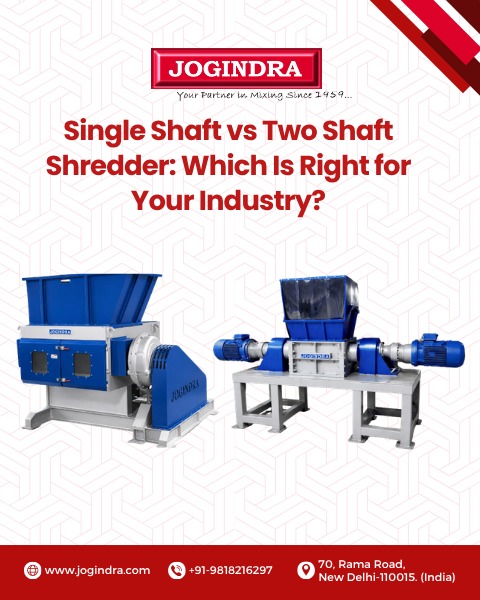
A single shaft shredder is often suitable when more controlled output sizing is required, while a two shaft shredder is commonly used to grip, cut, and tear bulky materials. The right choice depends on the type of material, required output size, production capacity, and recycling process.
Jogindra, one of the best plastic recycling machine manufacturers in India, offers a range of industrial machinery for shredding, grinding, pulverizing, granulating, and mixing applications. Understanding how these machines work can help businesses select suitable equipment for their plastic processing and recycling needs.
In this guide, we compare single shaft and two shaft shredders, explain their applications, and explore how different plastic recycling machines can work together in an industrial processing line.
What Is a Single Shaft Shredder?
A single shaft shredder is an industrial machine that uses one rotating shaft fitted with cutting blades to reduce materials into smaller pieces.
The rotating blades work against stationary blades to cut the material. Many models also include a hydraulic pusher to move material towards the cutting chamber and a screen to help control the size of the output.
Single shaft shredders are commonly used in plastic recycling plants and manufacturing facilities that process plastic lumps, pipes, profiles, and production scrap.
Common Applications of a Single Shaft Shredder
Depending on the machine configuration, a single shaft shredder can process:
-
Plastic lumps and manufacturing rejects
-
Plastic pipes and profiles
-
Plastic sheets and suitable containers
-
Plastic production scrap
-
Selected packaging waste
-
Compatible plastic materials requiring further size reduction
Benefits of a Single Shaft Shredder
1. More controlled output sizing
A suitable screen can help control the size of the shredded material before it moves to the next processing stage.
2. Useful for plastic recycling
The machine can reduce suitable plastic scrap before grinding, washing, or granulation.
3. Supports manufacturing operations
Plastic manufacturers can use shredders to process rejected products and leftover production material.
4. Works with other recycling equipment
Shredded plastic can be transferred to a granulator, pulverizer, or other suitable processing machine, depending on the required final product.
Businesses looking for plastic size-reduction equipment can explore Jogindra’s shredding and granulation machinery to understand which type of equipment suits their application.
What Is a Two Shaft Shredder Machine?
A two shaft shredder machine, also known as a double shaft shredder, uses two rotating shafts fitted with cutting blades or cutters. The shafts work together to grip, cut, and tear materials into smaller pieces.
Many two shaft shredders use low-speed, high-torque drives to process bulky or difficult-to-feed materials. Depending on the design, they can reduce material size without using a sizing screen, although the output may be less uniform than that of a screened shredder.
Two shaft shredders are commonly used for primary size reduction in plastic recycling, industrial waste management, and other material processing applications.
Common Applications of a Two Shaft Shredder
Depending on the machine’s design and cutting system, a two shaft shredder can process:
-
Bulky plastic waste and compatible plastic scrap
-
Selected rubber products and rubber waste
-
Industrial packaging waste
-
Manufacturing rejects
-
Certain textile waste
-
Other compatible industrial materials
The material must be suitable for the machine’s cutter design, motor capacity, and feeding system. Always confirm compatibility with the manufacturer before processing difficult or contaminated materials.
Benefits of a Two Shaft Shredder Machine
1. Effective material gripping
The two rotating shafts help grip and tear suitable materials during shredding.
2. Suitable for bulky waste
A properly configured machine can reduce the size of large or irregular materials.
3. Supports primary size reduction
It can prepare suitable waste for sorting, conveying, grinding, or further recycling.
4. Useful for different industrial applications
Depending on its configuration, a two shaft shredder can handle various compatible materials used in industrial waste processing.
For businesses planning a recycling line, choosing the correct shredder is an important first step towards efficient material handling.
Single Shaft vs Two Shaft Shredder: Key Differences
The main difference between a single shaft shredder and a two shaft shredder is their cutting mechanism and the way they reduce material size.
| Feature | Single Shaft Shredder | Two Shaft Shredder |
|---|---|---|
| Number of shafts | One rotating shaft | Two rotating shafts |
| Working principle | Cuts material against stationary blades | Uses two rotating shafts to grip and shear material |
| Output size | Often controlled using a screen | Depends on cutter design and material |
| Feeding system | May use a hydraulic pusher | Often uses the gripping action of the cutters |
| Common applications | Plastic lumps, pipes, profiles, and production scrap | Bulky waste, mixed scrap, and primary size reduction |
| Output consistency | More controlled sizing is possible with a suitable screen | Additional sizing may be needed for uniform output |
| Recycling role | Can prepare plastic scrap for granulation | Can reduce bulky material before further processing |
| Main selection factor | Required output size and material characteristics | Feed size, material properties, and primary shredding needs |
Which shredder is better? Neither machine is suitable for every application. A single shaft shredder may be a better choice when controlled output sizing is important, while a two shaft shredder may be suitable for reducing bulky or irregular materials.
The best option depends on your production requirements and the type of material you need to process.
Which Shredder Is Better for Plastic Recycling?
Both single shaft and two shaft shredders have important roles in plastic recycling. The right choice depends on the type of plastic waste, its size, and the output needed for further processing.
When Should You Choose a Single Shaft Shredder?
A single shaft shredder may be suitable when:
-
You need more controlled output sizing.
-
You process plastic lumps, pipes, profiles, or manufacturing scrap.
-
The shredded plastic will go through a granulator or another processing machine.
-
Your recycling process requires material within a particular size range.
For example, a plastic manufacturing unit may use a single shaft shredder to reduce production scrap before sending it to a granulator for further size reduction.
When Should You Choose a Two Shaft Shredder?
A two shaft shredder may be suitable when:
-
You need to reduce bulky or irregular waste.
-
The material requires gripping and tearing action.
-
You process compatible mixed plastic scrap or industrial waste.
-
You need primary size reduction before sorting or additional processing.
For example, a recycling facility handling large plastic waste may use a two shaft shredder to reduce material size before moving it to the next stage.
Before purchasing either machine, consider the material type, required throughput, target output size, and the specifications of your downstream equipment.
How Other Plastic Recycling Machines Work with Shredders
Shredding is often only one stage of the plastic recycling process. Depending on the type of waste and the final product, businesses may need additional machinery for grinding, pulverizing, washing, mixing, or converting plastic into reusable material.
Jogindra provides a range of industrial machinery for plastic recycling and processing applications. Each machine performs a different function in the production process.
1. Scrap Granulator Machine
A scrap granulator reduces suitable plastic scrap into smaller, more uniform pieces known as regrind or granules, depending on the material and equipment configuration.
After shredding, plastic may be processed through a granulator to achieve a size suitable for reuse or further processing.
Jogindra’s Scrap Granulator is relevant for businesses looking to reduce plastic scrap into reusable material.
2. PVC Pulverizer Machine
A PVC pulverizer is designed to grind suitable PVC and other compatible materials into fine powder.
Unlike a shredder, which mainly breaks material into larger pieces, a pulverizer performs finer size reduction. Pulverized material can be used in suitable plastic processing and manufacturing applications.
Jogindra’s PVC Pulverizer Machine is worth considering for businesses that need fine grinding rather than primary shredding.
3. Four Shaft Shredder
A four shaft shredder uses four cutting shafts to reduce compatible materials into smaller pieces. Its suitability depends on the material, required output, and machine design.
It may be considered for industrial waste processing applications where the additional cutting arrangement is appropriate.
Businesses comparing shredding options can evaluate single shaft, two shaft, and four shaft shredders according to their material handling and size-reduction requirements.
4. Plastic Agglomerator Machine
A plastic agglomerator is used to process certain types of plastic film, flakes, and lightweight plastic waste into denser agglomerated material.
This can help prepare suitable plastic for subsequent processing, such as extrusion. An agglomerator performs a different function from a shredder and is selected according to the characteristics of the material.
5. Plastic Washing Plant
A plastic washing plant helps remove dirt and other contaminants from suitable plastic waste before further recycling.
Depending on the material, a recycling line may include shredding, washing, drying, and granulation. The exact sequence depends on the type of plastic and the quality requirements for the recycled material.
6. Plastic Extruder Machine
A plastic extruder melts and processes compatible plastic material to produce a continuous output, such as strands or profiles, depending on the machine and die.
After suitable preparation, recycled plastic can be processed through an extruder to produce material for further manufacturing.
7. Heating Cooling Mixer and Ribbon Blender Mixer
Mixing equipment is used when different ingredients, additives, fillers, pigments, or compatible materials need to be blended as part of a plastic processing operation.
Jogindra’s product range includes Heating Cooling Mixer machines, Ribbon Blender Mixer machines, and High Speed Mixers. These machines serve mixing and blending requirements rather than replacing shredders.
How to Choose the Right Industrial Shredder
Before selecting a single shaft shredder or two shaft shredder machine, consider these important factors.
1. Type of Material
Identify the material you need to process, such as plastic scrap, rubber, packaging waste, or manufacturing rejects. Different materials require suitable cutter designs and machine configurations.
2. Material Size and Shape
Check the size, thickness, and shape of the incoming material. Large or irregular waste may need a different feeding arrangement from smaller plastic scrap.
3. Required Output Size
Decide how small the material needs to be after shredding.
If you need more controlled sizing, consider whether a screened single shaft shredder will meet your requirements. If the main goal is to reduce bulky waste, a two shaft shredder may be appropriate.
4. Production Capacity
Estimate the quantity of material you need to process per hour or per shift.
Actual throughput depends on material properties, feed size, cutter design, motor configuration, and operating conditions. Choose a machine based on your real production needs rather than motor power alone.
5. Power Consumption and Operating Costs
Compare the power requirements, expected output, maintenance costs, spare parts, and potential downtime.
A suitable machine should meet your processing requirements while keeping operating costs manageable.
6. Maintenance and Spare Parts
Check the availability of replacement blades, spare parts, and technical support. Regular maintenance helps keep the machine operating properly and can reduce unexpected downtime.
7. Future Processing Requirements
Think about what happens to the material after shredding. Will it need washing, granulation, pulverizing, mixing, or extrusion?
Understanding the complete process can help you select a shredder that works well with the other equipment in your recycling line.
Why Consider Jogindra for Plastic Recycling Machinery?
Choosing the right equipment is important for businesses setting up a new recycling unit or improving an existing production line.
Jogindra is one of the best plastic recycling machine manufacturers in India for businesses exploring machinery for plastic size reduction, recycling, and material processing.
Its product range includes equipment such as:
These machines serve different processing needs, from reducing plastic scrap and grinding suitable materials to mixing and preparing materials for further manufacturing.
When evaluating machinery from Jogindra, businesses should consider their material type, required capacity, output size, and final processing requirements. Comparing the correct specifications helps identify the most suitable equipment for the intended application.
If you are planning a plastic recycling plant or looking to upgrade your existing machinery, explore Jogindra’s relevant product range and discuss your processing requirements with the company.
Conclusion
Choosing the right shredder depends on your plastic material, required output size, and recycling needs. A single shaft shredder is ideal for controlled size reduction, while a two shaft shredder is suitable for bulky and tough materials.
Jogindra is one of the leading plastic recycling machine manufacturers in India, offering plastic shredders, scrap granulators, PVC pulverizers, plastic washing plants, and extruders. Explore the right plastic recycling machinery to improve processing efficiency and support your production goals.